


Introduction: The Living Wall
When we first learn about cells, it’s easy to picture the cell membrane as a simple wall or a passive plastic bag, just a container holding all the important bits of life inside. It defines the boundary between “in here” and “out there,” a seemingly straightforward job. But this simple image couldn’t be further from the truth. The plasma membrane is not a static wall; it’s a bustling, intelligent, and incredibly complex frontier.
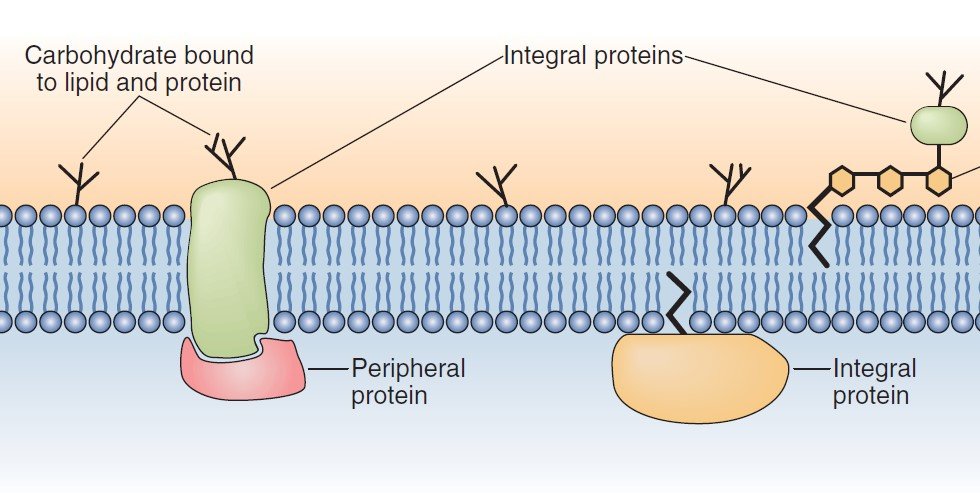
Scientists describe the membrane’s structure as a “fluid mosaic model.” This name perfectly captures its true nature: a dynamic, flexible barrier made of a lipid bilayer studded with proteins that are constantly moving, communicating, and carrying out essential tasks. It’s a gatekeeper, a communications hub, and a structural support system all in one.
This article will pull back the curtain on this vital component of life, revealing four astonishing facts that showcase just how sophisticated your body’s cellular gatekeepers truly are.
- Cholesterol: Not the Villain, But the Structural Stabilizer
In conversations about diet and health, cholesterol often gets cast as the villain. In the world of the cell membrane, however, it’s an indispensable hero. This molecule is a crucial component of the membrane, essential for maintaining its structural integrity and ensuring it functions correctly.
Here’s the surprising part: while we often associate fluidity with health, adding more cholesterol to the plasma membrane actually decreases its fluidity. This might seem counterintuitive, but it’s a vital regulatory function. By inserting itself between the membrane’s lipids, cholesterol acts as a stabilizer, preventing the membrane from becoming too fluid. It’s the doorman that ensures the gate is always stable, strong, and perfectly functional.
- A Clever Trick for Transporting Water
Cells face a constant challenge: they need to let massive amounts of water move in and out quickly, but they must simultaneously block the passage of other charged particles, like protons, that could disrupt the cell’s delicate balance. The solution is a piece of molecular engineering so elegant it’s difficult to comprehend: specialized channels called aquaporins.
These proteins form tiny pores exclusively for water. But they have a brilliant trick up their sleeve. To prevent protons from hitching a ride on the water molecules, aquaporins are designed to force each water molecule to “flip-flop” halfway through the channel. A water molecule enters with its oxygen leading into the channel, but halfway through, it is forced to rotate 180 degrees and leave with its oxygen trailing the hydrogen atoms. This simple flip breaks the chain of connections that protons would use to sneak through, effectively allowing water in while keeping unwanted ions out. It’s a perfect example of the incredible precision at work in our bodies.
- The Multi-Talented ‘Sugar Coat’ on Your Cells
Sticking to the outer surface of every cell membrane is a delicate, fuzzy layer known as the glycocalyx, or “sugar coat.” This layer, composed of carbohydrate chains attached to membrane proteins and lipids, is far more than just decoration. It is a multi-talented interface that allows cells to interact with their environment in a range of surprising ways. For example, the glycocalyx is fundamental to how our bodies are built, facilitating cell-to-cell recognition that allows cells to organize into tissues. Once formed, it acts as a protective shield, preventing cells from being injured by inappropriate substances. It even assists the immune system by helping T cells align properly with other cells to mount an effective response. In a particularly fascinating example within our blood vessels, the glycocalyx not only decreases the frictional forces of rushing blood but also diminishes fluid loss from the vessel, ensuring smooth and efficient circulation. This “sugar coat” is a perfect illustration of how the membrane is not just a barrier but an active, functional surface.
- When the Gatekeeper Fails: The Membrane in Disease
Because the plasma membrane is so central to a cell’s survival and function, even minor defects in its components can have devastating consequences for human health. The membrane is a constant battleground, where a single faulty part can lead to disease or allow a threat to take hold.
Two powerful examples highlight this reality:
- A Genetic Defect (Hereditary Spherocytosis): This disease is caused by a defect in a single protein called spectrin, which is part of the cell’s internal scaffolding that stabilizes the membrane. Specifically, the defective spectrin has a decreased ability to bind to another key component, the band 4.1 protein. Without this crucial link, red blood cells become fragile and misshapen. These abnormal cells are targeted for destruction in the spleen, leading to chronic anemia.
- An Acquired Resistance (Cancer): Some cancer cells can develop a defense mechanism using Multidrug-resistant (MDR) proteins. These proteins are a type of ABC-transporter embedded in the plasma membrane that actively pumps out the cytotoxic drugs meant to kill the malignant cell. By ejecting the treatment, these proteins allow the cancer to survive and thrive, leading to treatment failure.
These examples demonstrate how the integrity of the plasma membrane is a central front in medicine, where understanding its function is key to both diagnosing and treating disease.
Conclusion: The Complexity Within
The plasma membrane is a testament to the elegance and complexity of life. It is not a simple container but a dynamic, intelligent system that acts as a guard, a communicator, and a structural anchor. From the stabilizing role of cholesterol to the clever mechanics of aquaporins and the versatile functions of the glycocalyx, the membrane is a world of sophisticated activity.
Its critical role in both health and disease underscores its importance. Given the incredible complexity and elegance found in just the cell’s outer wall, what other wonders are hiding in plain sight within us?