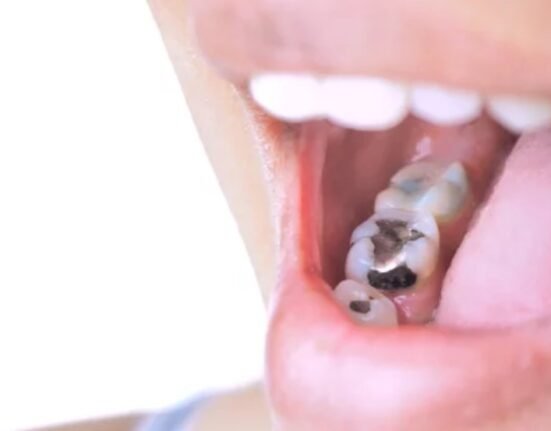

If you’ve ever had a cavity filled, there’s a good chance you have at least one of the classic “silver fillings” in your mouth. For over a century, they were the standard of care in dentistry—a common, durable solution for tooth decay. But these familiar fixtures hold some surprising secrets and are far more complex and controversial than most people realize.
This article reveals five of the most impactful and counter-intuitive facts about silver amalgam fillings, based directly on clinical information. What you learn might change the way you think about the dental work you’ve been living with for years.
——————————————————————————–
- They Aren’t Silver: They’re About 50% Mercury
Despite being called “silver fillings,” their main ingredient isn’t silver. The primary component is elemental mercury, which makes up approximately 50% of the material by weight. The rest is a powdered alloy of other metals, including silver, tin, copper, and zinc.
So why mercury? It has a unique ability to bind the metal alloy powders into a workable, plastic paste at room temperature, which then hardens into a durable solid. In the dental office, these components are mixed in a pre-measured capsule inside a special machine called an “amalgamator” before being packed into a cavity. This high mercury content is the central reason for the health concerns and controversies that have surrounded amalgam for decades.
——————————————————————————–
- An Old Flaw is Also a Surprising Strength: They ‘Self-Seal’ Over Time
One of the fascinating paradoxes of amalgam is that a characteristic often seen as a flaw—corrosion—provides an unexpected benefit. Over time, the surface of an amalgam filling naturally corrodes in the moist environment of the mouth.
While this might sound like a problem, the byproducts of this corrosion process slowly seep into the microscopic gaps between the edge of the filling and the wall of the tooth. The surprising outcome is that this creates a “micro-seal.” This seal helps block bacteria from leaking into the space, which can prevent or delay the formation of new cavities (known as secondary decay) that can form around the edges of a filling. Here, a process we associate with failure—corrosion—becomes the filling’s greatest long-term ally in the fight against new decay.
——————————————————————————–
- Removing Them Can Be More Dangerous Than Keeping Them
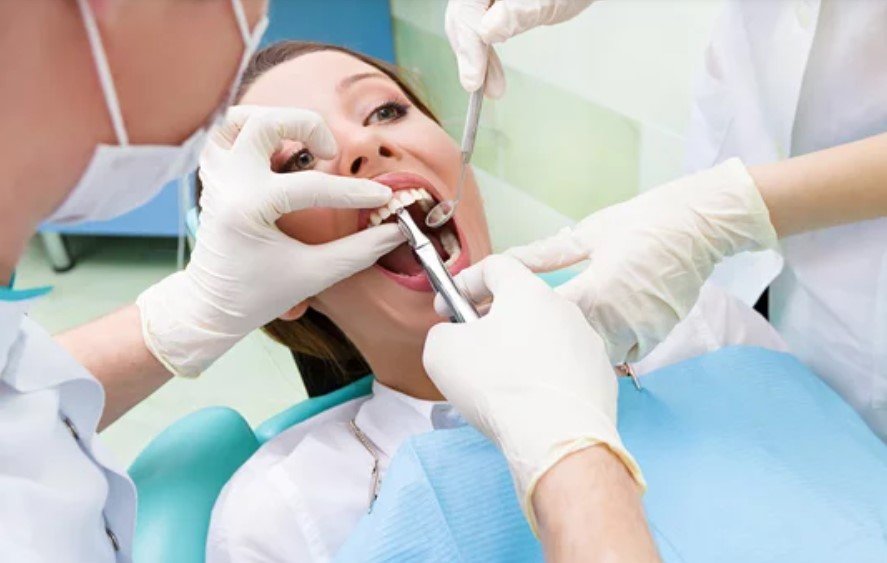
The moment of highest mercury exposure from an amalgam filling is not during chewing or daily wear, but during its removal. The heat and friction from a dentist’s drill aerosolize the mercury, creating an easily absorbable vapor. This is a primary pathway for exposure, carrying potential neurotoxic effects for both the patient and the dental team.
To address this serious risk, a special protocol known as SMART (Safe Mercury Amalgam Removal Technique) was developed. Key steps include:
- Using a rubber dam to isolate the tooth and protect the rest of the mouth from debris and vapor.
- Providing the patient with an external clean air supply, like oxygen, to breathe through the nose.
- Employing high-volume suction systems both inside the mouth, right next to the tooth, and outside the mouth to capture any ambient vapor.
- Continuously spraying the filling with cold water to minimize heat generation and reduce the amount of mercury that turns into vapor.
- Cutting the filling into large chunks for removal rather than grinding it down into a fine powder.
The existence of this rigorous protocol reveals a critical truth: removing an old amalgam filling is a far more complex and hazardous procedure than placing one.
——————————————————————————–
- Swallowing a Piece is Surprisingly Low-Risk
If a small, solid piece of an old amalgam filling breaks off and is accidentally swallowed, the risk of acute mercury poisoning is very low. This may seem counter-intuitive given the concerns about mercury, but the reason lies in the chemistry of the material.
A hardened piece of amalgam is chemically inactive and is not easily broken down by stomach acids. The fragment will typically pass through the entire digestive system and be expelled from the body without any significant amount of mercury being absorbed. This is in sharp contrast to the much higher risk of inhaling mercury vapor, which is easily and efficiently absorbed by the lungs and can enter the bloodstream.
——————————————————————————–
- They Are Incredibly Durable, Lasting for Decades
Despite being a technology that dates back to the 19th century, amalgam fillings are exceptionally durable and long-lasting. Consider that this material, first used when medicine was still rudimentary, can outperform some modern alternatives in sheer longevity. Its ability to withstand the immense bite forces on molars made it the go-to material for the hardest working teeth in the mouth for over 150 years.
A well-placed and properly maintained amalgam filling has an average lifespan of 10 to 15 years. However, it is clinically well-known for some fillings to remain fully functional for 20 years or more.
——————————————————————————–
Conclusion: A Complex Legacy
Amalgam fillings represent a dual legacy in dentistry. On one hand, they are a durable, cost-effective, and long-lasting solution that has saved countless teeth from extraction. On the other, they carry legitimate health concerns due to their mercury content and environmental concerns from improper disposal, which is why removal protocols use special amalgam separators to prevent toxic waste from entering the water supply.
The story of amalgam is a reminder that even the most common medical materials have complex histories. The goal is not alarm, but informed discussion. Any decision about your fillings should be a joint one made between you and your dentist, based on the latest science and your personal health. With this knowledge, you can look at any old fillings with a new understanding of the surprising science sitting in your smile.