Quiz: Short-Answer Questions
Answer the following questions in 2-3 sentences based on the provided source material.
- What are the three main structural components of the cytoplasm, and what is its fluid component called?
- Describe the basic structure of a ribosome and its role in protein synthesis.
- Explain the primary structural and functional differences between the Rough Endoplasmic Reticulum (RER) and the Smooth Endoplasmic Reticulum (SER).
- What are mitochondria, and what are the two main ways they synthesize ATP?
- Describe the structure of the Golgi apparatus and its general function in the cell.
- What is the function of the protein clathrin, and in what two major transport pathways are clathrin-coated vesicles involved?
- How are lysosomes formed, and what is their primary function?
- What are the three major components of the cytoskeleton, and what is their collective purpose?
- Explain the process of receptor-mediated endocytosis, including the role of ligands and receptors.
- Differentiate between regulated secretion and constitutive secretion.
——————————————————————————–
Answer Key
- The three main structural components of the cytoplasm are organelles, inclusions, and the cytoskeleton. The fluid component in which these structures are suspended is called the cytosol. Organelles are metabolically active units, inclusions are generally temporary accumulations of material, and the cytoskeleton provides a structural framework.
- A ribosome is composed of a small and a large subunit, each made of ribosomal RNA (rRNA) and numerous proteins. Ribosomes are the sites where messenger RNA (mRNA) is translated into protein. The small subunit binds mRNA and tRNA, while the large subunit catalyzes peptide bond formation.
- The RER is a system of membrane-bounded sacs studded with ribosomes, and it is primarily involved in the synthesis of secretory, plasma membrane, and lysosomal proteins. The SER is an irregular network of tubules lacking ribosomes and is prominent in cells synthesizing steroids, triglycerides, and cholesterol, as well as being involved in drug detoxification and muscle contraction.
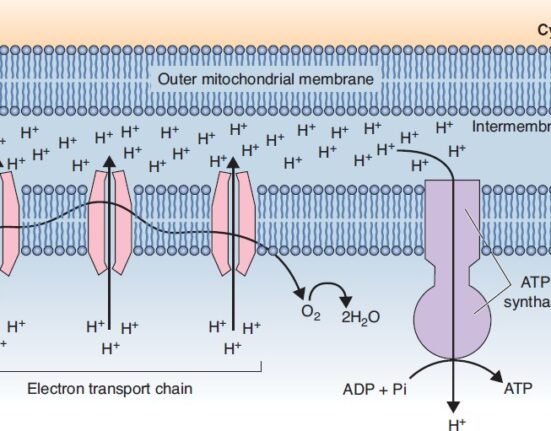
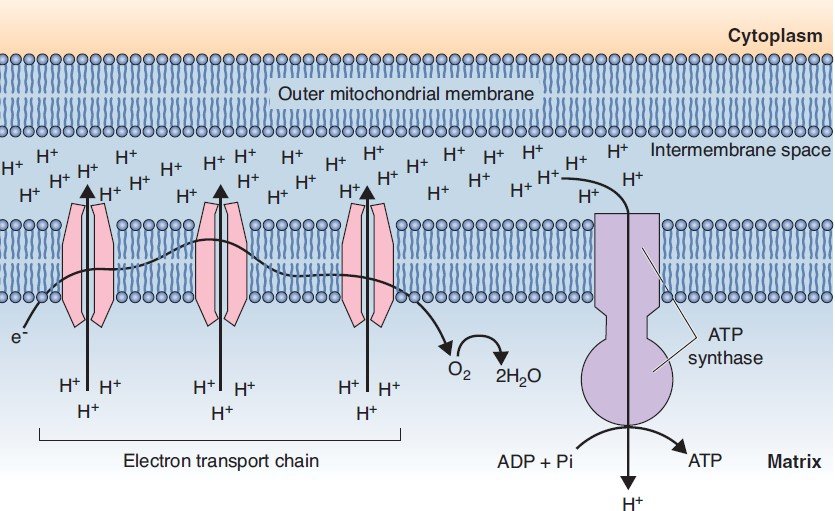
- Mitochondria are rod-shaped organelles with an outer membrane and a folded inner membrane (cristae). They synthesize ATP via the Krebs cycle, which occurs in the matrix, and through a chemiosmotic coupling mechanism involving the electron transport chain and ATP synthase located on the inner membrane.
- The Golgi apparatus consists of a stack of several membrane-bounded cisternae, exhibiting polarity with a cis face (near the RER) and a trans face. Its primary function is to process membrane-packaged proteins synthesized in the RER. It is also involved in recycling and redistributing membranes.
- Clathrin forms a polyhedral cage-like lattice around vesicles. Clathrin-coated vesicles are formed during receptor-mediated endocytosis for the uptake of specific molecules and are also used in the signal-directed transport of proteins from the trans-Golgi network (TGN) to either secretory granules or the lysosome pathway.
- Lysosomes are formed when material sequestered by the cell fuses with a late endosome that has received a full complement of lysosomal enzymes from the Golgi complex. Their primary function is to degrade materials, such as foreign substances taken into the cell (heterophagy) or old cellular components (autophagy), using their internal acid hydrolases.
- The three major components of the cytoskeleton are microtubules (hollow tubes of tubulin), actin filaments (double helices of G actin), and intermediate filaments (heterogeneous protein filaments). Collectively, the cytoskeleton functions to maintain cell shape, stabilize cell attachments, facilitate endocytosis and exocytosis, and promote cell movement.
- Receptor-mediated endocytosis is the specific uptake of a substance, or ligand. The process begins when a ligand binds to its specific receptor on the plasma membrane, causing ligand-receptor complexes to cluster in a clathrin-coated pit, which then invaginates to form a vesicle containing the ligand.
- Regulated secretion is the release of stored proteins and other materials in response to a specific extracellular signal. In contrast, constitutive secretion is the continuous release of materials, such as collagen, without an intermediate storage step and does not require an extracellular signal.