
Introduction: From Feared Term to Understood Tool
During the COVID-19 pandemic, the word “intubation” entered the public vocabulary, often linked with fear and the most severe outcomes of the illness. News reports and personal stories painted a picture of a last-ditch, often unsuccessful, medical intervention. While intubation is indeed a serious procedure reserved for critically ill patients, many common perceptions are incomplete.
The reality is that intubation is a life-saving tool designed to support the body during a period of extreme stress. Its purpose isn’t to signal an endpoint but to provide a crucial bridge to recovery. This article will share five key facts about intubation to demystify the procedure and provide a clearer understanding of what it is, why it’s used, and its role in modern medicine.
——————————————————————————–
The 5 Key Takeaways
- Intubation is a Supportive Tool, Not a Precursor to Death
- A persistent myth, amplified during the pandemic, is that being intubated means there is little hope of recovery. This is incorrect. Intubation is a procedure designed to help patients recover by taking over the work of breathing, allowing their bodies to heal.
- Scientific studies have shown that a significant portion of intubated COVID-19 patients recovered. Furthermore, for patients intubated after major procedures like open-heart surgery, recovery rates are very high. The procedure itself is a supportive measure, not a final one.
- You May Have Been Intubated Without Even Knowing It
- Intubation is not just for patients with severe respiratory failure. It is a standard and routine part of many surgeries performed under general anesthesia. If you’ve had a major operation, you were likely intubated while you were unconscious.
- The reason is that general anesthetic drugs can paralyze all the muscles in the body, including the diaphragm, which is essential for breathing. This makes it impossible for the patient to breathe on their own during the operation. Intubation provides a secure airway and allows a machine called a ventilator to breathe for the patient, ensuring their body receives the oxygen it needs throughout the surgery.
- The Goal Is Always Removal (Extubation)
- Intubation is almost always a temporary measure. The medical team’s primary goal is to remove the breathing tube as soon as it is safe to do so. This process is called extubation.
- Doctors continuously assess the patient to determine when they have recovered enough to breathe effectively on their own and maintain sufficient oxygen levels in their blood. Once these criteria are met, the tube is removed. This frames the procedure as a temporary bridge that supports a patient until their own body can take over again.
- It’s a Highly Precise and Monitored Procedure
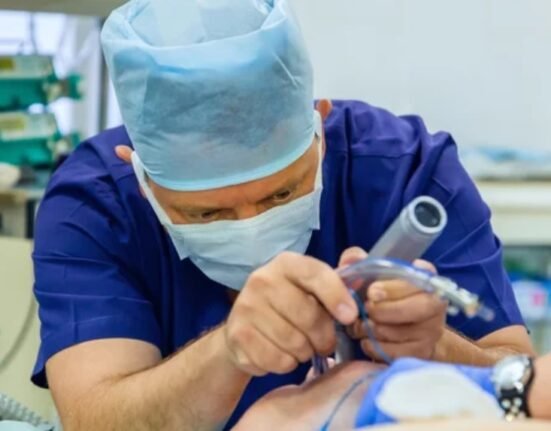
- Far from being a crude or rushed action, intubation is a highly controlled and precise medical procedure performed by specialists like anesthesiologists who manage patients during surgery, critical care physicians who oversee the sickest patients in an ICU, and emergency room doctors who must act swiftly to stabilize life-threatening conditions.
- The patient is typically under anesthesia or heavy sedation, and the procedure is not painful. A doctor uses a special device with a light to get a clear view of the vocal cords and carefully guide the breathing tube into the windpipe (trachea). Once in place, a small balloon at the end of the tube is gently inflated to hold it securely in place and ensure that all air from the ventilator goes directly into the lungs. The doctor then confirms the correct placement by listening to the lungs with a stethoscope and often ordering a chest X-ray.
- In some cases, particularly for infants or when there is an injury to the mouth, the tube may be inserted through the nose instead of the mouth. This is known as “nasal intubation” and is less common in adults.
- Intubation Doesn’t Cure the Illness—It Buys the Body Time to Heal
- It is crucial to understand that intubation is not a cure for any underlying disease. Using the COVID-19 example, the breathing tube and ventilator do not treat the virus itself.
- Instead, the function of intubation is to provide life-saving respiratory support. By taking over the physically demanding work of breathing, it ensures that the brain, heart, and other vital organs receive a steady supply of oxygen. This frees up the body’s energy and resources to focus on the primary task: fighting the infection, recovering from surgery, or healing from a traumatic injury.
——————————————————————————–
Conclusion: A Misunderstood Lifeline
Intubation, while a serious intervention, is a critical and often misunderstood tool in modern medicine. It is not an endpoint but a supportive bridge designed to carry a patient through a critical period until their own body is strong enough to function independently. It is a powerful example of how modern medicine can hold the line, taking over a fundamental biological function to give the body the one resource it needs most: time to fight back and heal.
Now that you know more about this life-saving procedure, does it change how you view the challenges and triumphs of critical care?